采访进行到一半,几名学生抱着鲜花推开了物理教室的门。
那天是教师节。Aditya老师愣了一下,接过花笑着说:“每到这个时刻我都很开心。”
学生对他的喜爱,并不只出现在这个偶然闯入镜头的瞬间。前不久的学生社团展上,AMC社团的学生们称他为“全世界、甚至全宇宙最强的物理老师”。
评价带着少年式的夸张,却也让人好奇:这位老师究竟做了什么,如此受学生欢迎?
Halfway through the interview, several students entered the physics classroom carrying flowers.
It was Teachers’ Day. Aditya looked momentarily surprised. Taking the flowers, he smiled and said, “Moments like this always make me happy.”
The students’ affection for him was not limited to this unexpected moment. At a recent student club exhibition, members of the AMC Club described him as “the strongest physics teacher in the world—perhaps even in the entire universe.”
Their words carried the playful exaggeration of teenagers, but they also raised an intriguing question: What had this teacher done to become so well loved by his students?
01
从印度走出的
物理奥林匹克竞赛选手
Aditya出生在印度。一次偶然的静电体验,让七八年级的他第一次认真追问:周围没有电源,自己为什么会被电到?
他带着疑问找到物理老师,也从此对物理产生兴趣。
“我从小就想知道事物是怎样运作的。机器为什么会动?电脑怎样工作?这些现象背后真正的物理是什么?”
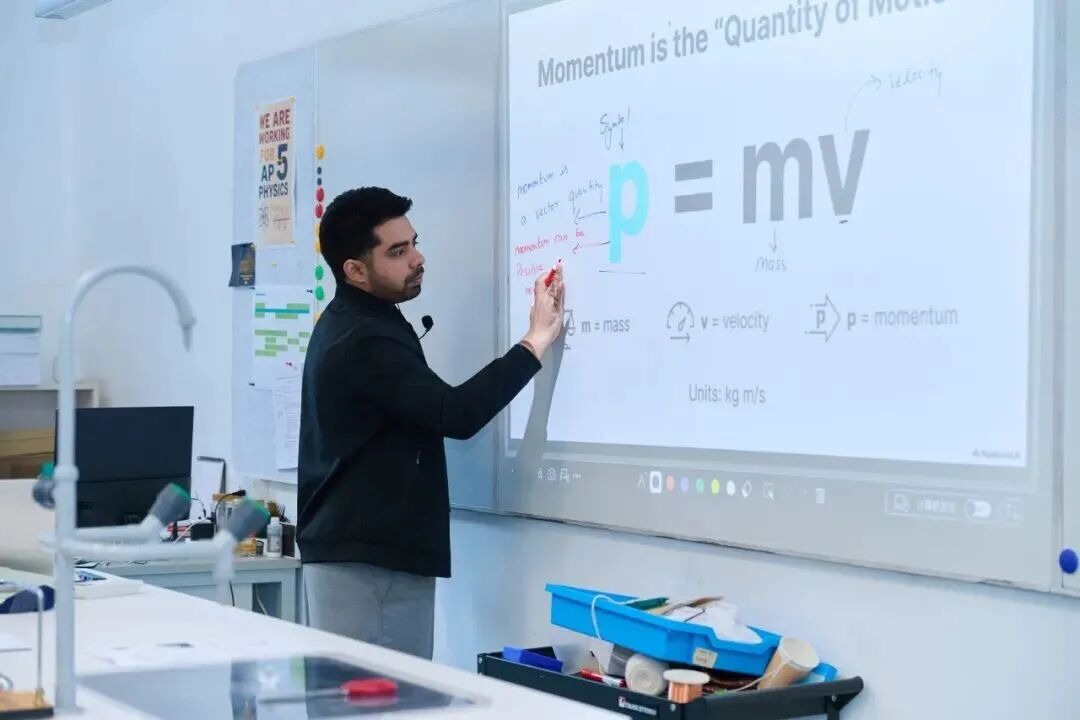
学生时代,他通过印度JEE考试,入选物理奥林匹克团队,进入全印度前16名。大学期间,他同时学习物理和数学;硕士阶段继续深造物理,并参与纳米技术研究。此后,他又取得教育学学位和英国QTS教师资格。
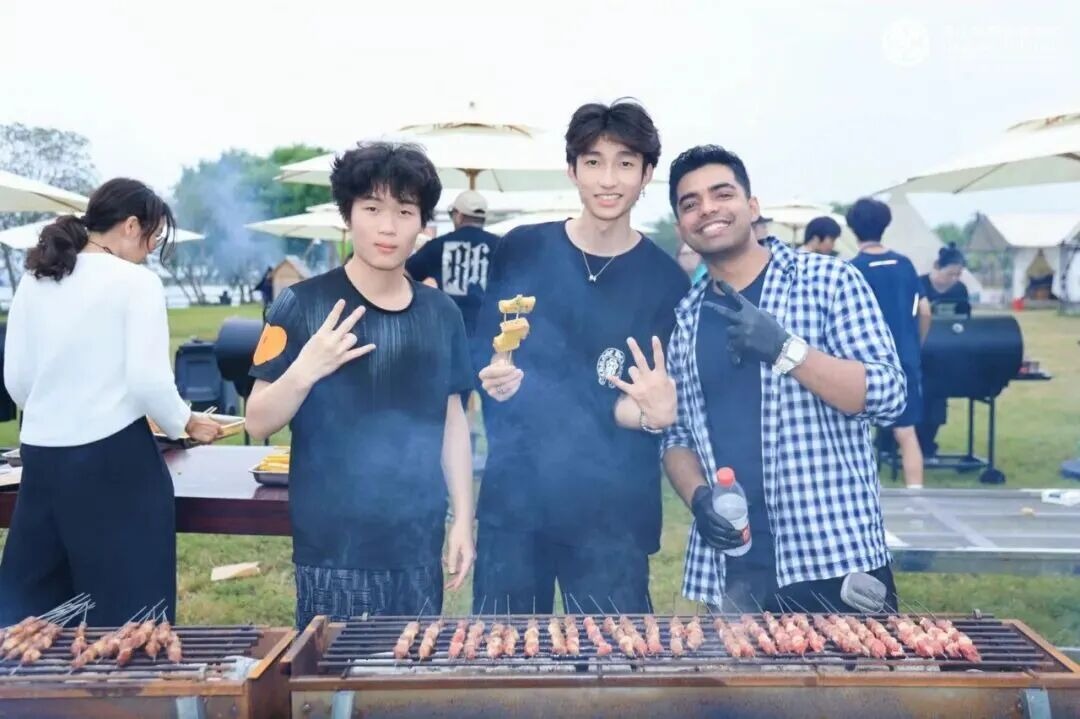
如今来到苏州,Aditya仍保持着学习者的状态。课后,他学习普通话,也会在课堂上试着说,学生则帮他纠正。生活中,他喜欢苏州的湖景、饺子和烧烤,工作再忙也会坚持运动。
从印度乡村到苏州,从研究物理到教授物理,那份想要弄清世界如何运作的好奇,一直没有改变。
10月18日狄邦华曜校园体验日,孩子将走进真实课堂,家长可以与校长面对面,了解从课程学习、兴趣探索到竞赛与研究的培养路径。
Aditya was born and raised in a rural village in India. When he was in Grade 7 or 8, an unexpected encounter with static electricity prompted him to ask a question: if there was no visible source of electricity, why had he received an electric shock?
He took the question to his physics teacher, and it was this experience that first sparked his interest in physics.
“I have always wanted to understand how things work. Why do machines move? How do computers work? What is the physics behind these phenomena?”
As a student, Aditya passed India’s highly competitive JEE examination and joined a Physics Olympiad team that ranked among the top 16 in the country.
At university, he studied both physics and mathematics. He later pursued a master’s degree in physics and participated in nanotechnology research. He subsequently earned a degree in education and obtained Qualified Teacher Status in the United Kingdom.
Now living in Suzhou, Aditya continues to see himself as a learner. Outside the classroom, he studies Mandarin and sometimes tries speaking it with his students, who help correct him. He enjoys Suzhou’s lakes, as well as dumplings and barbecue, and makes time for exercise no matter how busy work becomes.
From rural India to Suzhou, and from studying physics to teaching it, his curiosity about how the world works has remained unchanged.
On 18 October, students attending the Dipont Huayao Campus Experience Day will step into real classrooms, while parents will have the opportunity to meet the Head of School and learn about the pathways connecting classroom learning, individual interests, academic competitions, and research.
扫码报名10月18日体验日
领取国际竞赛规划资料包
02
面对学有余力的学生,
他不只是给出“更难的题”
Aditya曾在印度、刚果(金)和中国教书。课程、文化和实验条件各不相同,但他发现,孩子们有一件事相同:都对世界怎样运作感到好奇。
来到中国后,他发现这里的学生基础扎实,推理能力也很强。尤其是优才和巅峰项目的学生,他们理解得快,一道普通的题很难真正挑战他们。
但他的做法,通常不是立刻增加计算量。当学生说“加速度很简单”时,他会追问:“那你能不能设计一个装置,把加速度真正展示出来?”
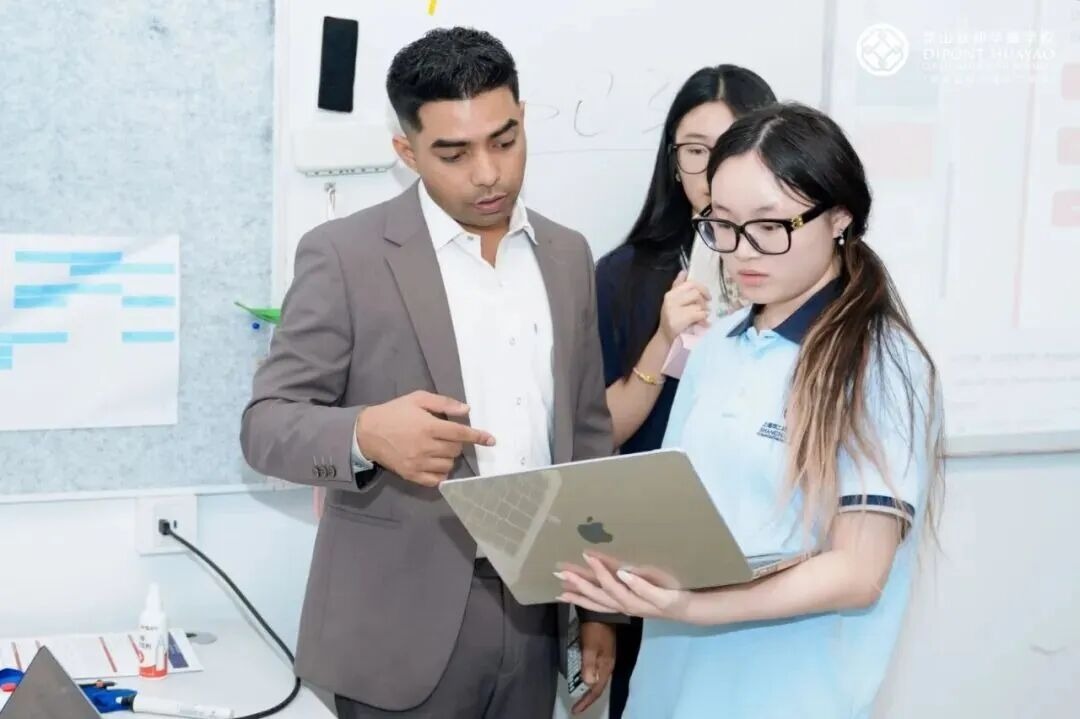
在纸上做题,条件都是给定的;一旦开始动手,学生便要自己选择材料、设计步骤、决定测量什么。装置可能无法工作,数据也可能和预测完全不同。
这时,他更常做的是站在一旁继续提问。因为在他看来,真正有价值的挑战,不只是做更难的题,而是让学生从解决别人提出的问题,慢慢走向提出自己的问题。
或许正因如此,他们愿意亲近这位老师,也愿意接受他一次次看似简单、却并不好回答的追问。
Aditya has taught in India, the Democratic Republic of the Congo, and China. Although the curricula, cultures, and experimental conditions differed, he found that children everywhere shared the same curiosity about how the world works.
After coming to China, he found that students here had strong foundations and well-developed reasoning skills.This was especially true of students in the High Flyer and Summit programmes: they grasped concepts quickly, and an ordinary problem was rarely enough to truly challenge them.
Yet his usual response was not simply to increase the complexity of the calculations.When a student says, “Acceleration is easy,” Aditya asks, “Then can you design a device that actually demonstrates acceleration?”
On paper, all the conditions are provided. Once students begin experimenting, however, they must choose their own materials, design the procedure, and decide what to measure. The device may not work, and the data may differ completely from their predictions.
At such moments, he is more likely to stand beside his students and continue asking questions. In his view, a truly meaningful challenge is not simply about solving harder problems, but about helping students move from answering questions posed by others to asking questions of their own.
Perhaps this is why students feel so comfortable around him—and why they are willing to engage with his questions, which may sound simple but are rarely easy to answer.
03
两篇国际期刊论文,
都从学生的提问开始
在日常课堂中,Aditya需要按照课程大纲教学,也要帮助学生准备考试。但在研究项目里,他会把更多空间交给学生,让问题从他们自己的兴趣中长出来。
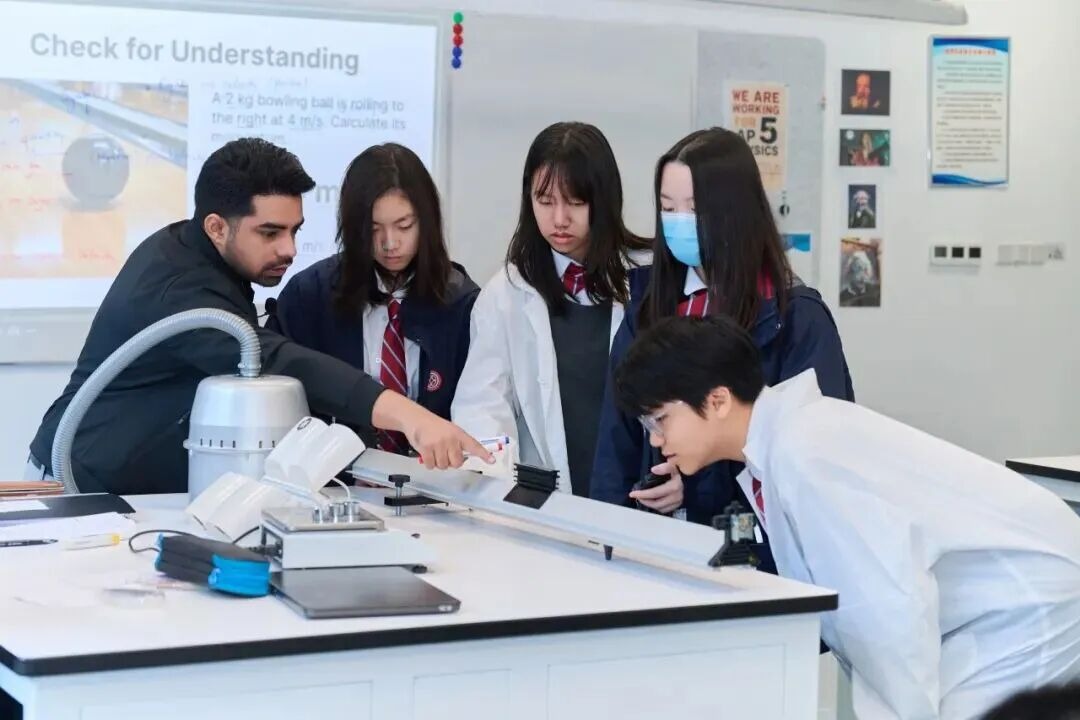
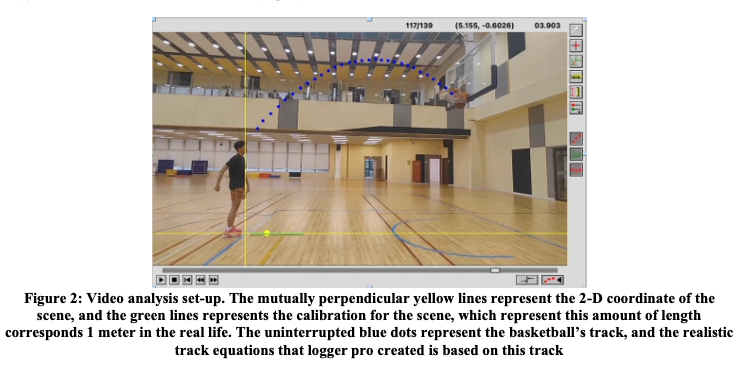
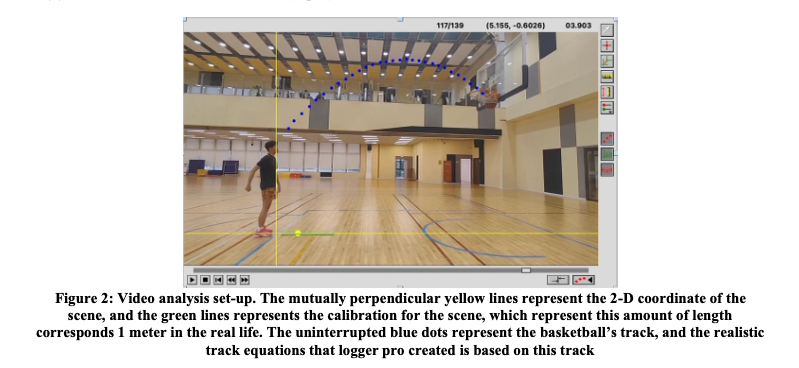
学习抛体运动时,有学生对篮球的飞行轨迹产生了好奇:真实环境中的篮球受到空气阻力,获得最大射程的角度还会是理想模型中的45度吗?
论文:《空气阻力对篮球运动轨迹的影响建模:轨迹偏差、阻力系数与最佳投射角分析》; 作者:Haohang Li, ZhenWei Tian, Haohan Pu, Aditya Vishwakarma
Aditya带着学生来到篮球场,拍摄篮球飞行过程,结合真实数据分析轨迹、建立模型。
研究发现,在实验设定的条件下,这一角度约为33度。学生由此进一步理解,课本结论有其成立的前提,而研究正是不断追问这些结论的适用边界。
还有学生质疑传统的摩擦力实验:只靠肉眼判断木块是否匀速运动,真的准确吗?
他们用手机记录木块在不同材料表面上的运动,再借助计算机视觉分析数据,让原本依赖观察的判断变得更加客观、可验证。
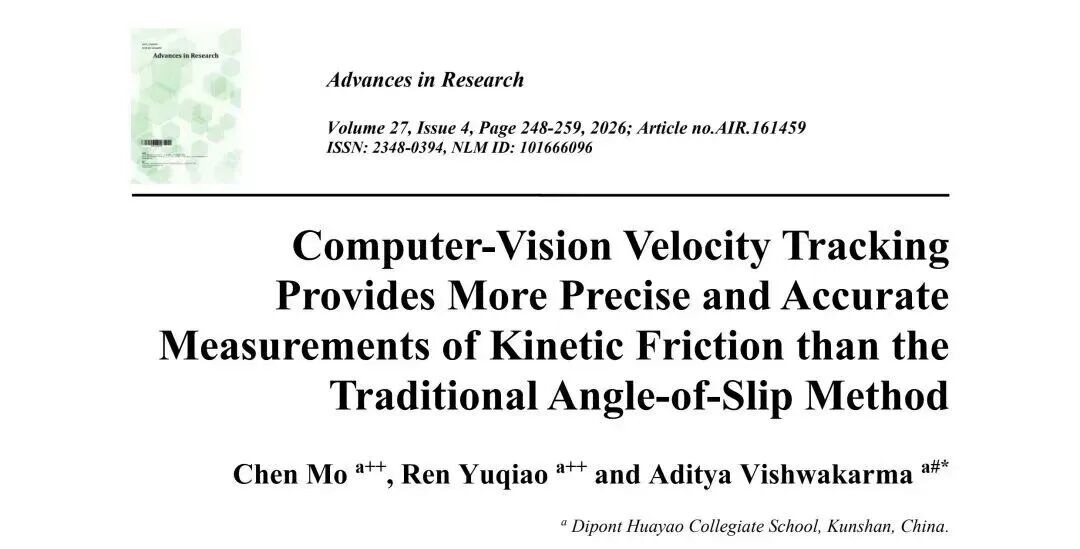
论文:《计算机视觉速度追踪:相比传统滑动角法,能够更精确、更准确地测量动摩擦力》;作者:Chen Mo,Ren Yuqiao,Aditya Vishwakarma
两项研究分别于2025年和2026年发表于国际期刊。
很多学生曾认为,研究属于科学家,需要大型实验室和高深知识。Aditya想消除的,正是这种距离感。
“我想让他们相信,自己提出的问题值得被研究。”
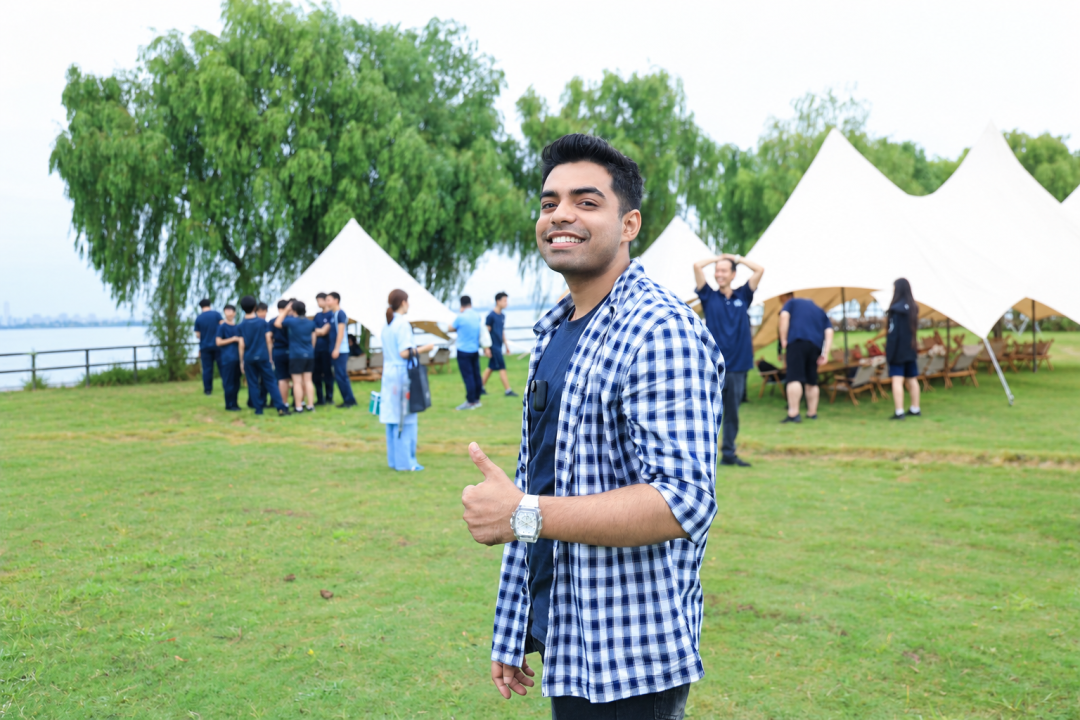
In his regular classes, Aditya follows the curriculum while also preparing students for examinations.
In research projects, however, he gives students more room to explore, allowing questions to emerge from their own interests.
While studying projectile motion, a student became curious about the trajectory of a basketball: Since a basketball in the real world is affected by air resistance, would the angle for achieving maximum range still be 45 degrees, as predicted by the ideal model?
Paper: Modeling the Effect of Air Drag on Basketball Trajectories: An Analysis of Trajectory Deviation, Drag Coefficient, and Optimal Launch Angle
Authors: Haohang Li, Zhenwei Tian, Haohan Pu, and Aditya Vishwakarma
Aditya took the students to the basketball court, where they filmed the ball in motion, analysed real-world data, and built a mathematical model. Their research found that, under the conditions of the experiment, the optimal angle was approximately 33 degrees. Through this process, the students came to understand that textbook conclusions are based on specific assumptions—and that research involves continually examining the conditions and limits within which those conclusions hold true.
Another group questioned a traditional friction experiment: was it really accurate to rely solely on the human eye to determine whether a wooden block was moving at a constant speed?
They used mobile phones to record the block moving across different surfaces and then applied computer vision to analyse the data, making what had previously depended on visual judgement more objective and verifiable.
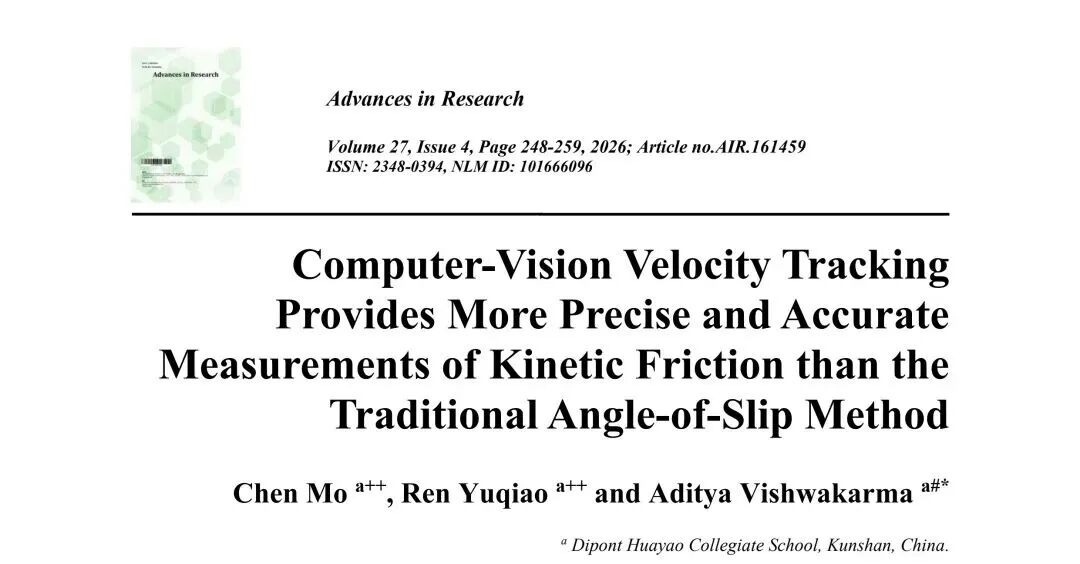
Paper: Computer-Vision Velocity Tracking Provides More Precise and Accurate Measurements of Kinetic Friction than the Traditional Angle-of-Slip Method;Authors:Chen Mo,Ren Yuqiao,Aditya Vishwakarma
The two studies were published in international journals in 2025 and 2026, respectively. Many students once believed that research was something only scientists could do—something that required sophisticated laboratories and advanced knowledge. Aditya hopes to break down this perceived barrier.
“I want them to believe that the questions they ask are worth investigating.”