
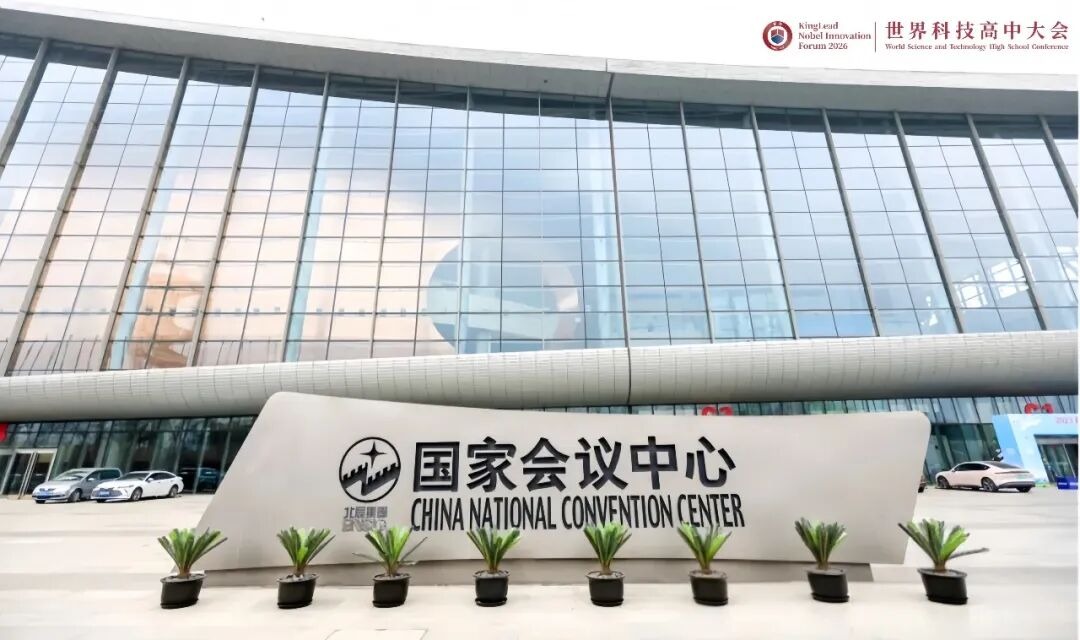
On March 28, 2026, the KingLead 2026 Nobel Innovation Forum & World Science and Technology High School Conference, hosted by KingLead, organized by Beijing Academy, and strategically partnered with the Western Association of Schools and Colleges (WASC), was successfully held at the National Convention Center and Beijing Academy, providing valuable practical achievements and experience sharing for schools around the world committed to the development of science and technology high schools.
This forum brought together Nobel laureates, world-class academicians, international accreditation organizations, principals of renowned international schools from around the world, and representatives from over 100 international schools. With the aim of fostering in-depth discussions and exchanges, and building practical benchmarks aligned with international standards, the forum sought to respond to global challenges with Chinese experience, establish standards, build consensus, and pool resources. Together, participants worked to advance the development of science and technology high schools with both international vision and Chinese characteristics, offering practical experience and achievement demonstrations for schools worldwide dedicated to the construction of science and technology high schools.
01
Opening Address:
Building Global Consensus,
Embarking on a New Journey for Science and Technology High Schools
The forum commenced in a warm and dynamic atmosphere. Mr. Xia Qingfeng, Secretary of the Party Committee of Beijing Academy Education Group and Principal of Beijing Academy, delivered the opening address. He extended a warm welcome to all participants and expressed his gratitude to KingLead and all parties for their trust and support for Beijing Academy.
Mr. Xia Qingfeng
Principal of Beijing Academy
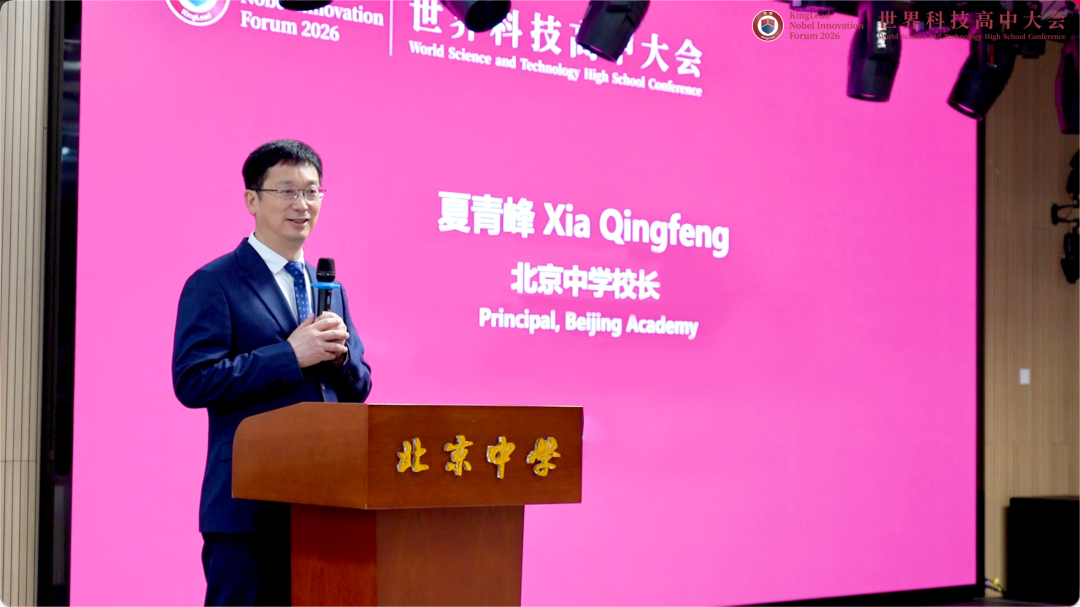
In his address, Principal Xia reviewed the development journey of Beijing Academy. Since its founding, the school has gradually grown into a public education group encompassing multiple campuses and covering primary, middle, high school, and international education programs, becoming one of the largest education groups in Beijing.
He emphasized that Beijing Academy has always remained committed to its original educational mission. The school has established three core principles in its operation: first, the type of school to run is not the goal; the kind of individuals to cultivate is what truly matters; second, respond to uncertainty with certainty, focusing on the core elements of student growth; third, the life one leads is the education one receives.
In terms of concrete practices, Beijing Academy has consistently adhered to three initiatives: first, building a spiritual home based on trust, making the campus a spiritual home for teachers and students; second, exploring pathways for personalized education, making the campus a learning center for teachers and students; third, advocating “creative growth,” integrating innovation into students’ daily lives, making the campus a fertile ground for teachers and students to innovate.
After twelve years of exploration, Beijing Academy has gradually gained social recognition for its curriculum innovation, teaching reform, and cultivation of innovative talents. Looking ahead, the school will pursue the development of a science and technology high school, actively introducing resources from universities, research institutes, and enterprises to build an open platform for innovation and practice. At the same time, he emphasized that as science and technology education deepens, the importance of humanities literacy grows. The school will continue to place equal emphasis on science and humanities, fostering students’ comprehensive and individualized development.
In closing, Principal Xia noted that Beijing Academy is still in its initial stages and expressed his willingness to work hand in hand with fellow educators to jointly advance the promising future of education.
02
Keynote Speeches:
Nobel Laureate and World-Class Leading Scholars Discuss the Development of Science and Technology High Schools and the Cultivation of Innovative Talents
KingLead, as a Nobel Innovation Platform and Global Academician Platform, remains committed to building an international education standards system and promoting global dialogue on educational innovation.
At this forum, several world-class leading scholars engaged in high-level academic exchanges centered on the development of science and technology high schools and the cultivation of innovative talents. Guests including Nobel Laureate in Economic Sciences Prof. Eric Maskin, WASC President Dr. Barry Groves, Vice Principal of Beijing Academy Zhou Hui, and UWC Global Principal Naheed Bardai shared their insights on topics such as quality assurance, practical exploration, and global responsibility.
Keynote Speech 1
Nobel Laureate Eric Maskin:
A Perspective on Science and Technology
High Schools from Economics

Speaker:
Prof. Eric Maskin
Honorary Chair of the World Science and Technology High School Conference;
Nobel Laureate in Economic Sciences, University Professor at Harvard University;
Professor of Economics and Mathematics at Harvard University;
Member of the National Academy of Sciences;
Member of the American Academy of Arts and Sciences
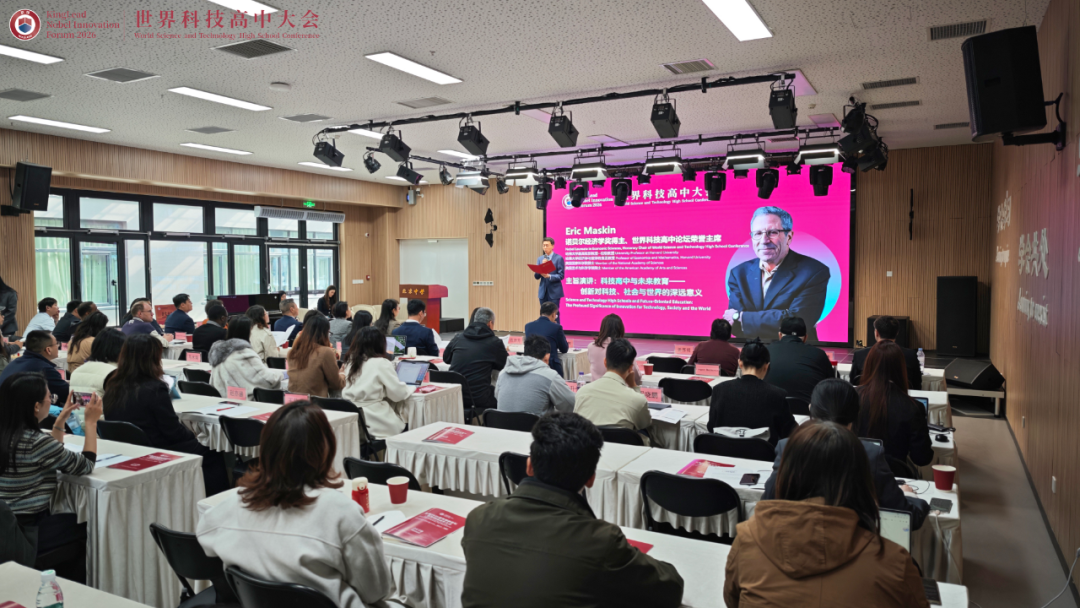
Nobel Laureate in Economic Sciences and Harvard University Professor Prof. Eric Maskin delivered a keynote speech titled “Science and Technology High Schools and Future-Oriented Education: The Profound Significance of Innovation for Technology, Society and the World.”
Professor Maskin explained the logic of innovation as the fundamental engine of social development from an economic perspective. He pointed out that traditional basic education has long emphasized “certainty”—students are taught to memorize standard answers—while true scientific innovation is built on “uncertainty.” He emphasized that high school is a critical window for shaping thinking, and the value of science and technology high schools lies in transforming innovation from a gift possessed by a few into a cultivable competency, allowing students to shift from passive recipients of knowledge to active practitioners of scientific inquiry.
Professor Maskin spoke highly of KingLead for providing global educators with a transparent framework to break through traditional education models through rigorous research and standard-setting. He specifically noted that KingLead, as the host of this conference, played a key role in advancing the development of global standards for science and technology high schools. He also announced the release of two important reports at this forum—the KingLead 2026 China Science and Technology High School Development Research Report and the KingLead 2026 World Science and Technology High School Development Research Report—stating that these reports offer schools a concrete framework for integrating scientific inquiry into core curricula.
Finally, Professor Maskin recalled his visit to Beijing Academy in 2024 and expressed his appreciation for the curiosity and thirst for knowledge demonstrated by the students who participated in his Nobel Innovation Workshop, noting that Beijing Academy has taken solid steps in exploring the development of a science and technology high school. As Honorary Chair of the World Science and Technology High School Conference, Professor Maskin announced the awarding of the “Nobel Innovation Laboratory” plaque to Beijing Academy, encouraging the school to further introduce world-class academic resources and cultivate more innovative talents.
Keynote Speech 2
WASC President Dr. Barry Groves:
A Perspective on Science and Technology
High Schools from International Accreditation

Speaker:
Dr. Barry Groves
President of the Western Association of Schools and Colleges (WASC);
Doctor of Education from Stanford University
Dr. Barry Groves, President of the Western Association of Schools and Colleges (WASC), delivered a keynote speech titled “WASC Empowers Science and Technology High Schools: Forging the Path for Future Talents through Innovative Education.” Dr. Groves first congratulated KingLead on the release of its two major reports on science and technology high schools and affirmed KingLead’s contributions to the future development of international education.
Dr. Groves then recalled his visit to Beijing Academy in 2024 and congratulated the school on obtaining WASC Initial Accreditation in January 2026. He emphasized that the future does not belong to those who merely possess more knowledge, but to those who can create. The value of science and technology high schools lies in teaching students how to think, how to ask questions, and how to learn from setbacks—precisely the educational direction supported by WASC accreditation.
Dr. Groves also explained how WASC’s three standards—Vision and leadership, Curriculum and assessment, and School culture and support—ensure that innovation is built on a solid educational foundation, emphasizing that the spirit of continuous improvement aligns closely with the essence of scientific exploration.
In conclusion, Dr. Groves highlighted the value of the reports for all schools and called on global educators to work together to build science and technology high schools, opening new doors for students.
Keynote Speech 3
UWC Global Principal Naheed Bardai:
A Perspective on Science and Technology
High Schools from Global Practice

Speaker:
Principal Naheed Bardai
UWC Global Principal;
Principal of UWC Atlantic College in the UK
Principal Naheed Bardai, UWC Global Principal and Principal of UWC Atlantic College, delivered a keynote speech titled “Exploration and Sharing of Student Research and Innovation Projects at UWC Atlantic College.”
Principal Bardai first introduced the 60-year history of UWC Atlantic College as the founding college of the United World Colleges and the birthplace of the International Baccalaureate (IB) program, as well as its mission of “making education a force for peace and a sustainable future.” He mentioned that he was invited by KingLead to visit China and participate in the Nobel Innovation Forum in 2025, expressing his optimism about the future development of education.
Drawing on UWC Atlantic College’s practice in developing a science and technology high school, Principal Bardai shared three core principles and explorations of his school:
First, shifting from disciplines to systems. Beyond the traditional IB curriculum, the college has innovatively introduced the “Systems Transformation Pathway,” a project-based program that guides students to conduct applied research on real-world issues such as food systems, biodiversity, and energy transition, cultivating their ability to solve complex problems.
Second, driving innovation through diversity. He believes that the most powerful engine of innovation is not hardware equipment, but the cognitive diversity of the student body. With students from over 90 countries conducting research together, the diverse perspectives brought by different cultural backgrounds make solutions more resilient and universally applicable.
Third, valuing the process rather than focusing solely on outcomes. The college encourages students to engage in research that may fail, with evaluation criteria centered on students’ resilience, academic integrity, and ability to ask better questions, rather than merely pursuing perfect final results.
He commended KingLead for establishing the World Science and Technology High School Platform, noting that such global collaboration is crucial for advancing the development of standards for science and technology high schools.
03
Nobel Laureate Announces Nobel Innovation Laboratory Plaque Awarding, World-Class Academic Resources Empower the Development of Science and Technology High Schools
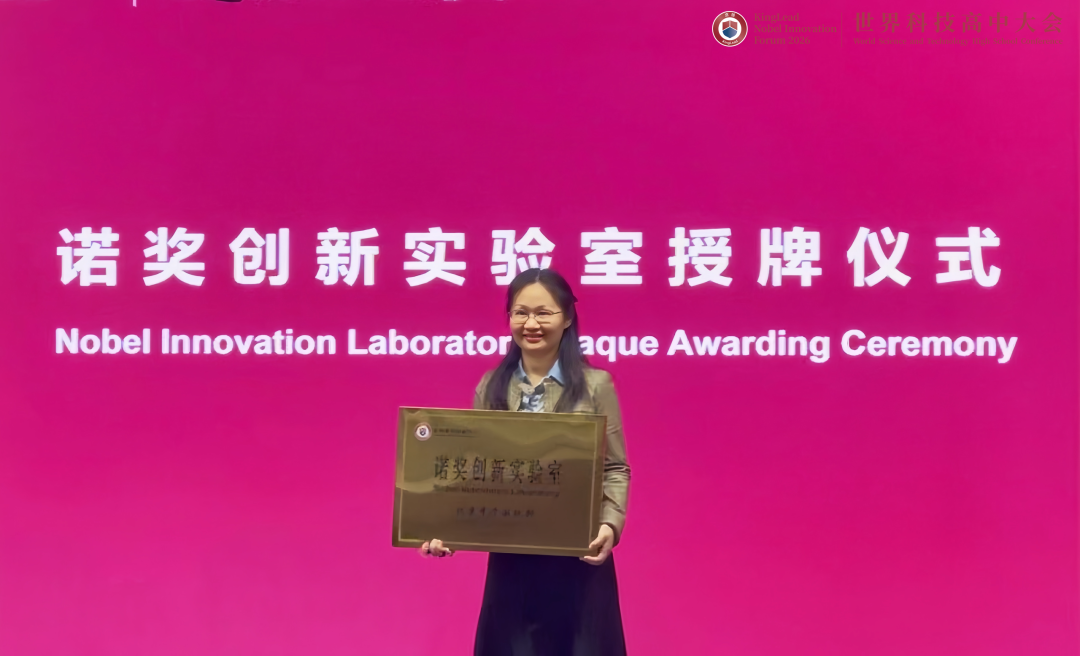
As Nobel Laureate in Economic Sciences and Honorary Chair of the World Science and Technology High School Conference, Professor Maskin announced the official awarding of the Nobel Innovation Laboratory plaque to Beijing Academy. This recognition not only affirms Beijing Academy’s exploration in developing a science and technology high school but also serves as encouragement and support for the school to continue introducing world-class academic resources and creating research opportunities for more students in the future. Ms. Zhou Hui, Vice Principal of Beijing Academy, accepted the Nobel Innovation Laboratory plaque on stage.
Keynote Speech by Zhou Hui, Vice Principal of Beijing Academy:
Responding to the Call of the Times through Practical Innovation
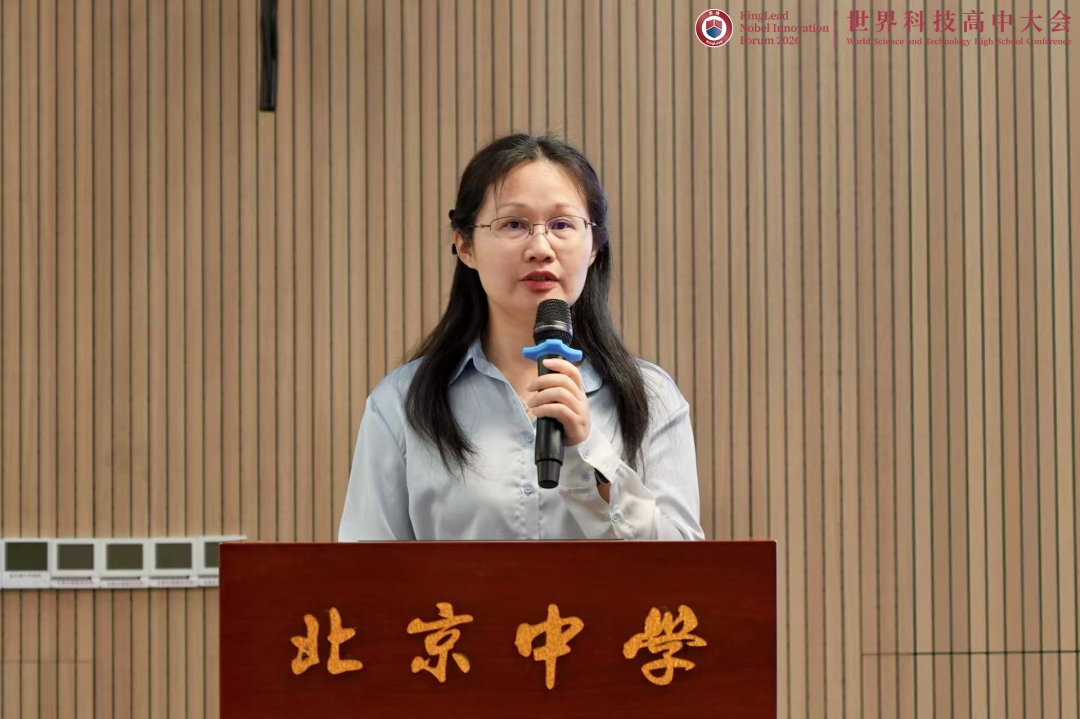
As the representative of the host school, Ms. Zhou Hui, Vice Principal of Beijing Academy, delivered a keynote speech titled “Reflections and Practices on the Development of the Science and Technology High School at Beijing Academy,” sharing the school’s exploration and thoughts on cultivating top-notch innovative talents.
Since its establishment in 2013, Beijing Academy has been committed to building a modern school that embodies Beijing style, Chinese character, and a global vision. Guided by the educational goal of “one body with two wings,” the school has developed a three-tier curriculum system consisting of “foundation courses—enrichment courses—potential development courses,” which solidifies students’ academic foundation while broadening their horizons and stimulating their innovative potential.
In terms of empowering education through science and technology, the school has implemented practices across four dimensions: first, integrating project-based learning and subject week activities into disciplines such as physics, chemistry, and biology through a multi-dimensional curriculum system, allowing students to deepen their understanding through hands-on practice; second, incorporating “small-scale” scientific practices into daily life, encouraging students to conduct small experiments at home and participate in campus space design and construction, embedding innovation into everyday experiences; third, connecting the entire learning journey through interdisciplinary approaches, engaging students in multi-disciplinary inquiry around real-world problems to cultivate their ability to apply knowledge comprehensively; fourth, integrating high-end resources extensively by inviting over a hundred leading scholars, including Nobel laureates and academicians, to the school, while also taking students to university laboratories and technology enterprises, creating an ecosystem for science-education integration characterized by “inviting in, going out, deepening collaboration, and promoting exchange.”
Looking ahead, Beijing Academy will focus on developing a science and technology high school, systematically building a system for cultivating top-notch innovative talents, creating smart and integrated learning spaces for scientific innovation, and strengthening mechanisms for collaboration between schools, universities, and society. Vice Principal Zhou Hui stated that the school will remain committed to its original aspirations and work together with fellow educators to strive for excellence in both broad vision and meticulous implementation, supporting students in growing through innovation and advancing through creativity.
04
Research Reports Released:
KingLead 2026 World Science and Technology High School Development Research Report
KingLead 2026 China Science and Technology High School Development Research Report
Standards System and Development Guidance for the Construction of Science and Technology High Schools
Prof. Mark Girolami, Chaired Professor of Engineering at the University of Cambridge, Fellow of the Royal Academy of Engineering, and Chief Scientist of The Alan Turing Institute, officially released the KingLead 2026 World Science and Technology High School Development Research Report and the KingLead 2026 China Science and Technology High School Development Research Report.

Speaker:
Prof. Mark Girolami
Chaired Professor of Engineering;
University of Cambridge;
Royal Academy of Engineering Research Chair;
Fellow of the Royal Academy of Engineering;
Chief Scientist of The Alan Turing Institute
Professor Girolami, from the perspective of artificial intelligence and systems engineering, pointed out that global education is undergoing a critical inflection point—what physicists and complex systems engineers call a “Phase Transition”—from “knowledge instillation” to “original innovation” in the era of artificial intelligence. He emphasized that the development of science and technology high schools is no longer just an “alternative” educational track; they are the absolute foundational infrastructure for the future. Approaching from the standpoint of a rigorous empirical researcher, Professor Girolami noted that the KingLead 2026 World Science and Technology High School Development Research Report and the KingLead 2026 China Science and Technology High School Development Research Report, based on KingLead’s eight years of relentless research accumulation and big data research, possess high academic rigor and reliability, providing global educators with standardized, systematic, and forward-looking guidance for the development of science and technology high schools.
The KingLead 2026 World Science and Technology High School Development Research Report systematically constructs a Four Core System Frameworks for the development of science and technology high schools—Operational Mechanisms, Curriculum Systems, Faculty Teams, and Outcomes & Assessment—and distills Five Core Construction Dimensions: Laboratory Planning and Academic Resources Integration; Introduction of External Experts and Internal Faculty Development; Hierarchical and Progressive Research Projects Integrated with Curricula; Student Participation Mechanisms Allowing Trial-and-Error; and Multi-dimensional Evaluation Systems Aligning with Top Universities’ Academic Standards. Through a systematic comparison of typical development pathways in the United States, the United Kingdom, and Canada, the report reveals the common logic and differentiated strategies of global science and technology high school development.
The KingLead 2026 China Science and Technology High School Development Research Report focuses on the five core construction dimensions of science and technology high schools, with an emphasis on local development guidance for science and technology high school construction. Drawing on his research and admissions experience at leading universities such as Cambridge, Professor Girolami highlighted two strategic insights distilled from the report: first, shifting the focus of development from high-cost hardware investment to the acquisition of soft academic resources, namely sustained, high-level cognitive mentorship from leading scientists; second, restructuring the outcome evaluation system, shifting from a standardized achievement orientation to an “Authentic Evaluation Architecture” that documents the entire research process. He particularly noted that Beijing Academy, as a typical case of locally-rooted educational innovation, offers significant reference value for promoting the development of science and technology high schools in China.
05
Roundtable Dialogue:
Renowned International School Principals Discuss the Development of World Science and Technology High Schools
The roundtable dialogue session at this forum, themed “Standard Development of Global Science and Technology High Schools and China’s Practical Innovation,” brought together six principals from renowned international schools across China to engage in in-depth exchanges on core issues such as the definition and connotation of science and technology high schools, curriculum integration, featured programs, and laboratory construction.
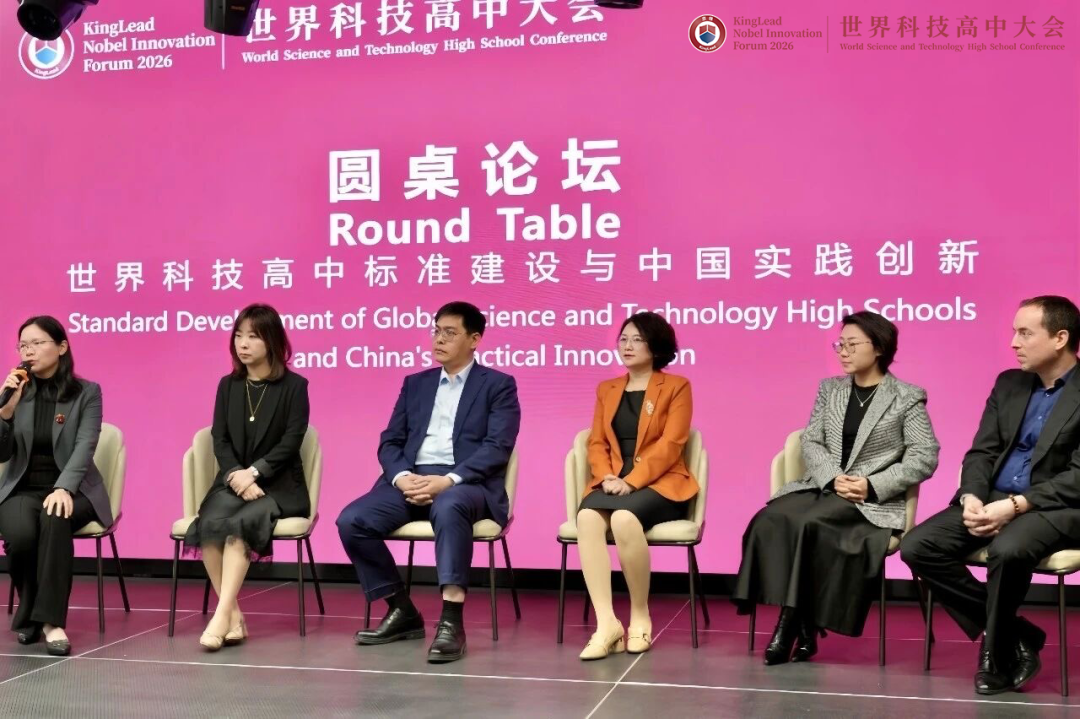
Ms. Xiao Lan,
Dean of Curriculum and Teaching Center,
International Division, Beijing Academy
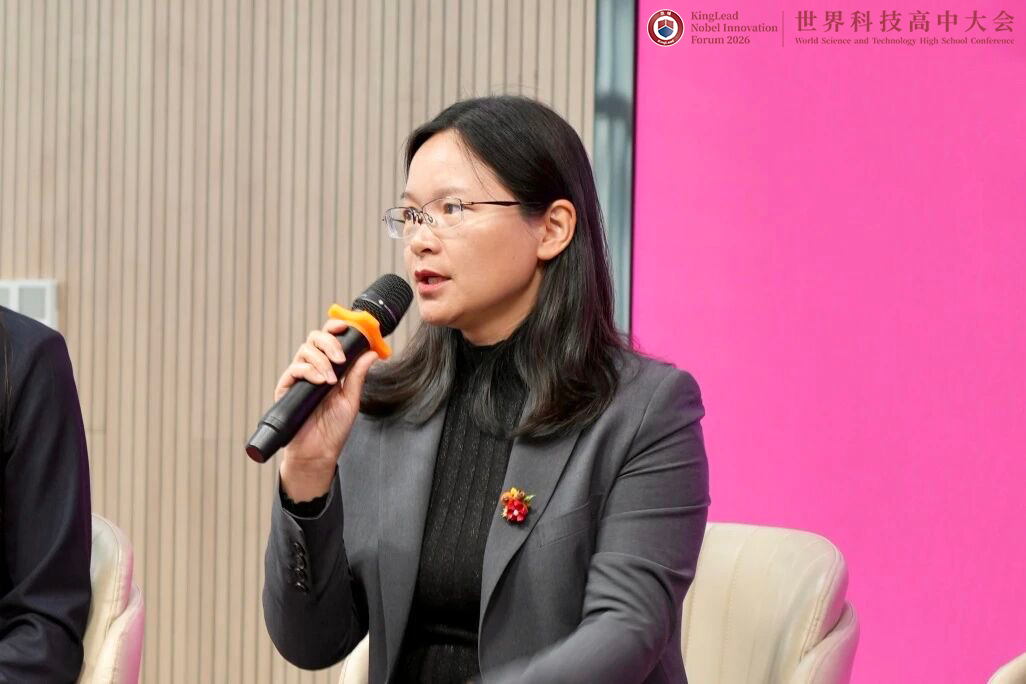
Ms. Xiao shared the school’s systematic exploration in science and technology education. In terms of curriculum, Beijing Academy offers over 20 AP courses covering mathematics, physics, chemistry, biology, environmental science, and other fields, while establishing a vertical pathway from foundational courses to advanced research. In teaching methods, the school guides students to conduct research starting from real-world problems through interdisciplinary project-based learning. She cited the example of a student who developed a navigation app for the visually impaired, demonstrating how students transform their ideas into tangible outcomes under the guidance of university professors.
Ms. Liu Shujing,
Principal of Overseas Chinese Academy
of Concord Suzhou (OCAC-Suzhou)
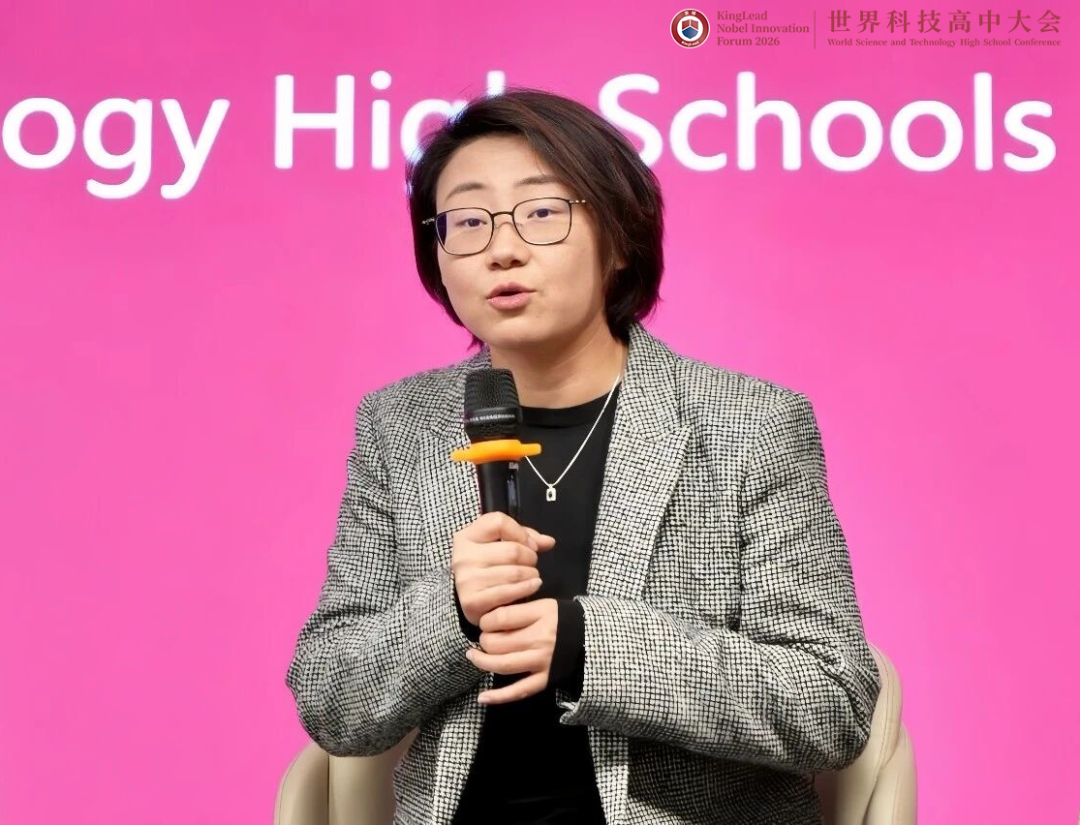
Principal Liu introduced the school’s unique “science and technology community” model. Over 70% of the school’s parent community hold master’s or doctoral degrees, including national second-level professors and Yangtze River Scholars. By building a resource platform, the school integrates parental resources across eight academic disciplines, allowing students to participate in authentic research projects from the sixth grade. She acknowledged that the challenge faced by the school is how to respect students’ interests in science and technology while guiding them toward diverse academic pathways.
Ms. Zhang Xinyi,
Vice Principal for Science and Innovation,
Beijing New Talent Academy
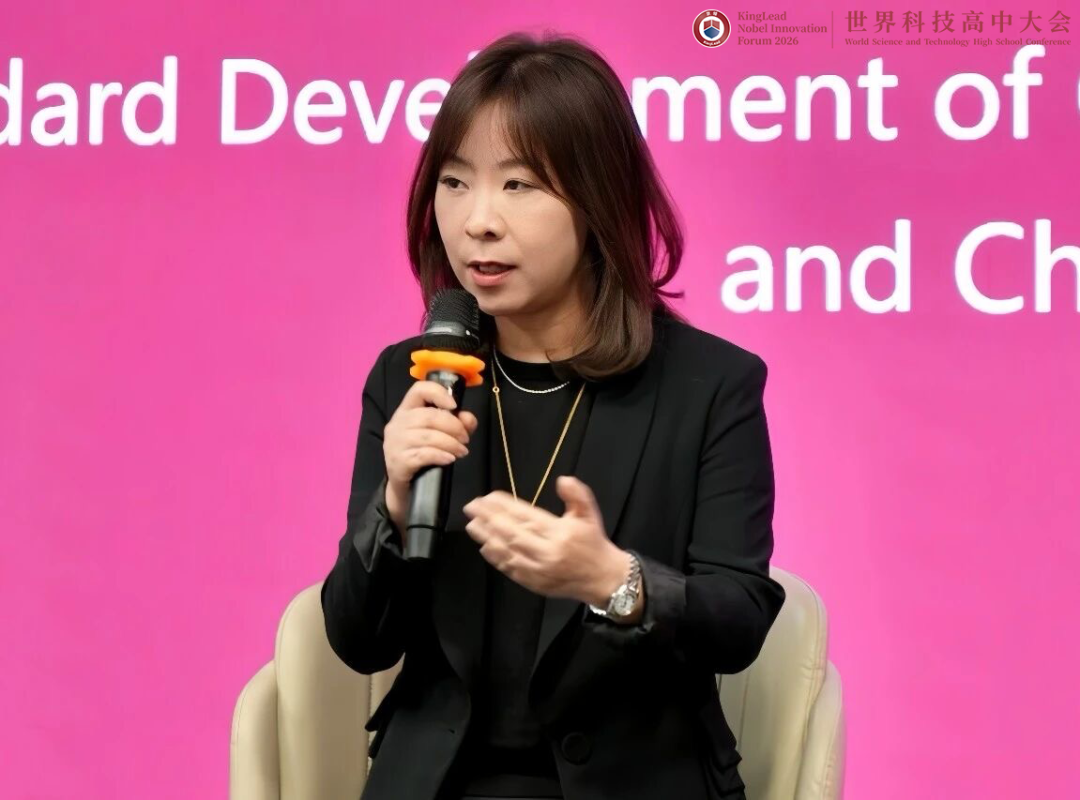
Principal Zhang elaborated on Beijing New Talent Academy’s philosophy in cultivating science and technology talents, using laboratory construction as an entry point. The school has established the Bohr Laboratory, the Aerostat Laboratory, and the Integrated Circuit Laboratory, focusing respectively on artificial intelligence, aerospace technology, and core key technologies, allowing students to engage in cutting-edge scientific exploration at the secondary level. She emphasized that behind laboratory construction lies the school’s original aspiration to cultivate science and technology talents with Chinese roots who are prepared to face future challenges.
Mr. Mathieu Demot,
Foreign Principal,
Suzhou North America High School
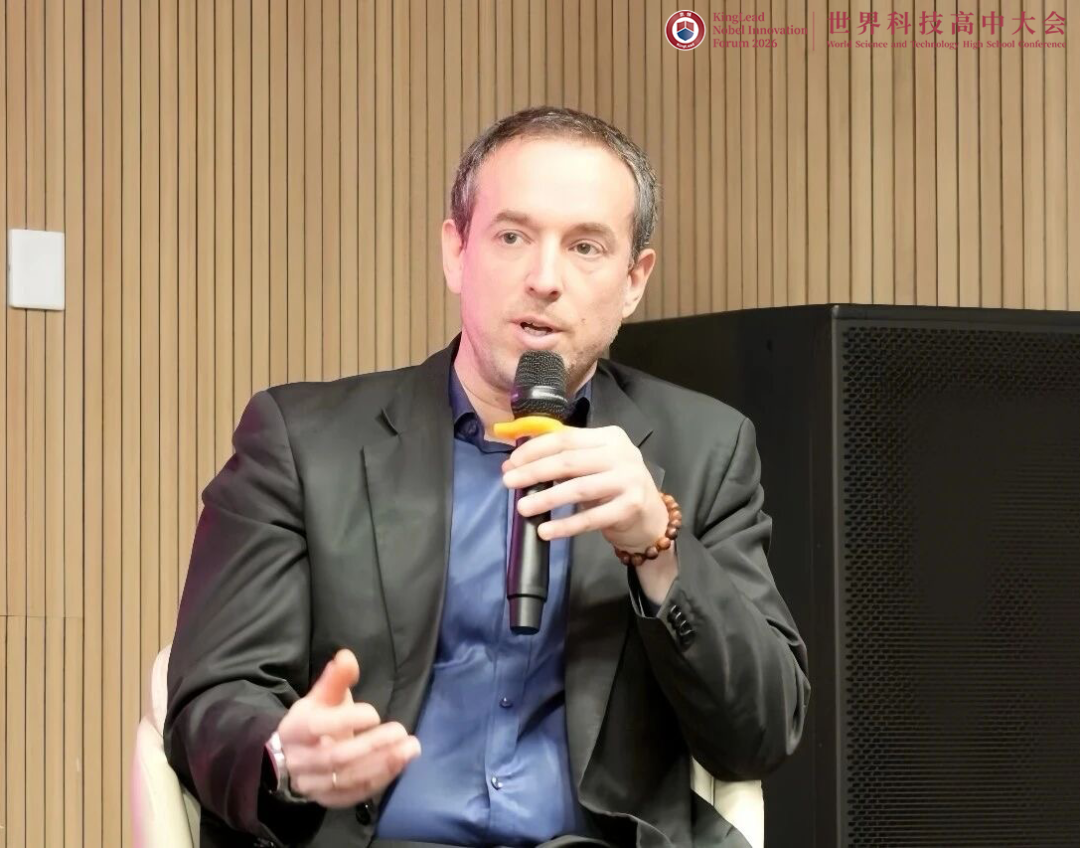
Principal Mathieu shared his school’s experience in laboratory construction and student research practice. The school has established multiple specialized laboratories in fields such as nanomaterials, genetic engineering, superconducting materials, and artificial intelligence, where students conduct authentic research. He specifically mentioned a student’s development of a plant underwater respiratory membrane as an example of secondary school students’ potential in scientific research. The school also opens its laboratory resources to over 50 schools in the Suzhou area, hosting weekend science and technology workshops that benefit more than a thousand students.
Mr. Xu Chunyang,
Principal of Tianjin Guanghua Cambridge
International School
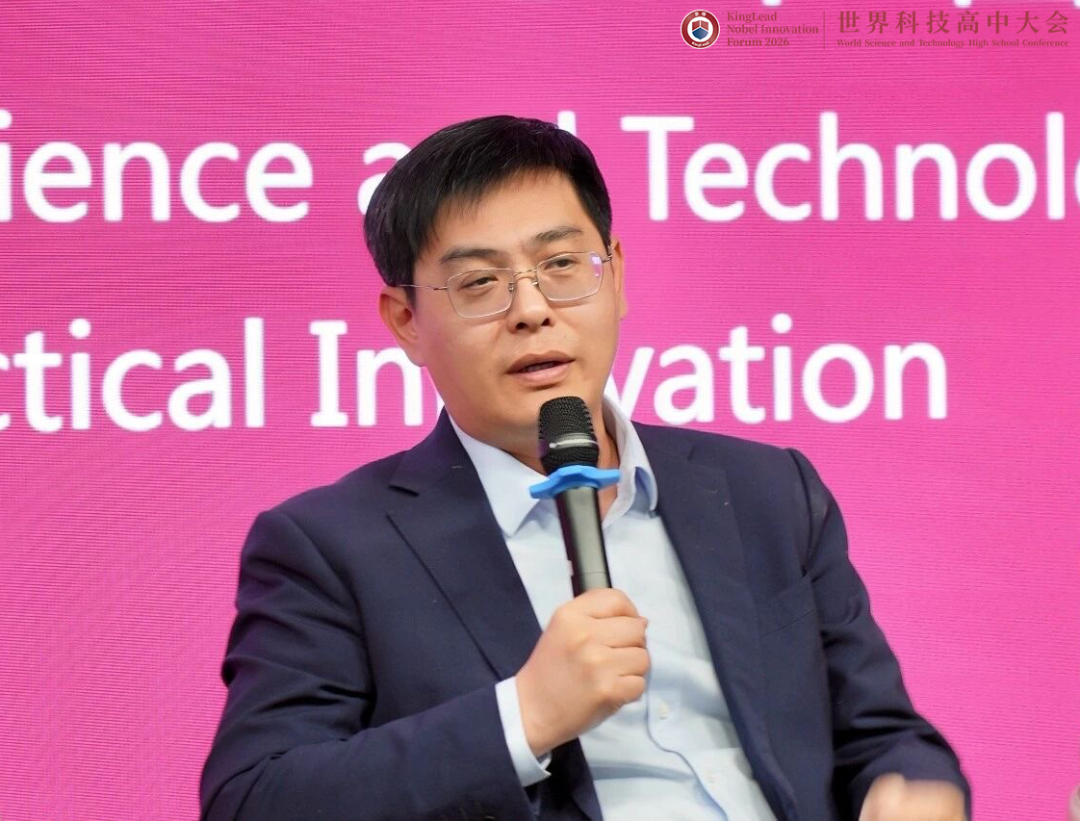
Principal Xu offered reflections from an institutional perspective. He pointed out that issues such as the unclear number of compulsory experiments at the high school level and insufficient instructional time currently constrain the in-depth implementation of science education. He suggested that the development of science and technology high schools requires institutional flexibility and long-term accumulation, and that students should choose schools based on their featured laboratories and educational directions rather than solely on college admission rates.
Ms. Fang Yuanyuan,
International High School Principal,
Chiway Repton School Xiamen
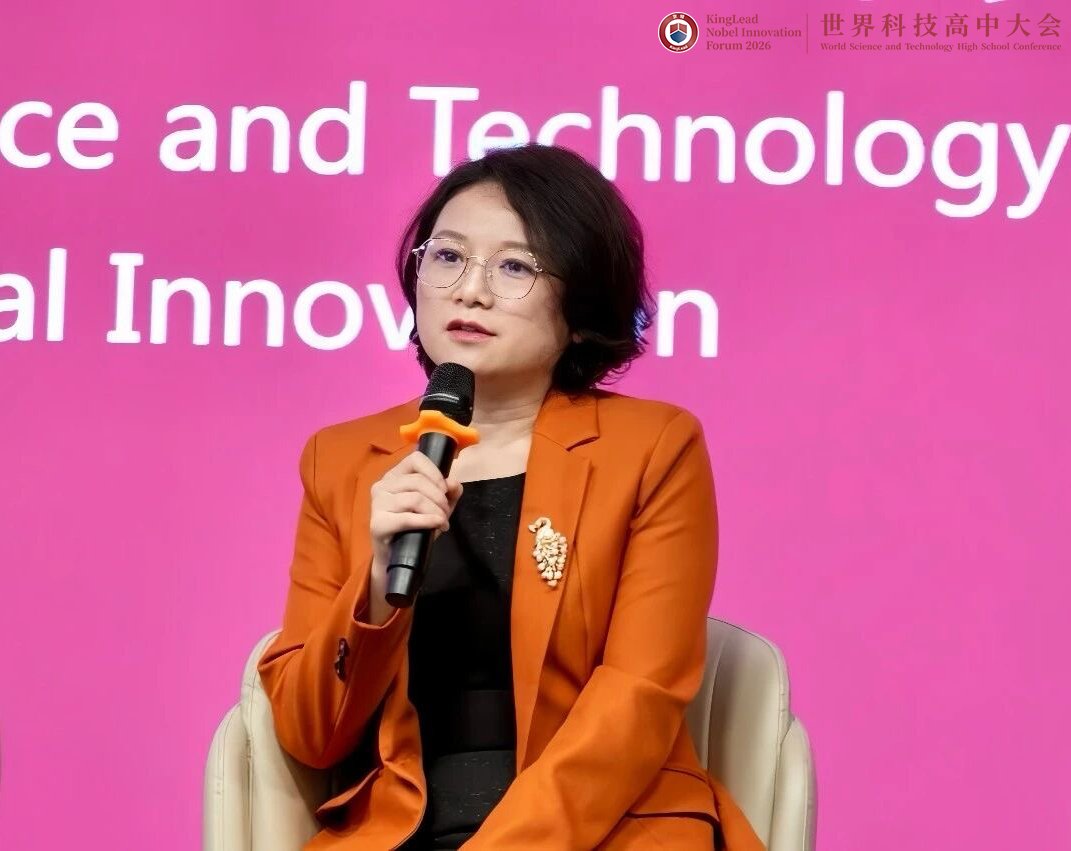
Principal Fang shared practical approaches to developing a science and technology high school based on her school’s experience in Xiamen. She emphasized that science and technology high schools should benefit all students, not only top performers. In terms of curriculum integration, the school builds upon A-Level and AP courses by offering advanced courses such as linear algebra and theoretical physics, deeply integrating them with experimental teaching. Regarding faculty development, she proposed that “selection is more important than training,” gradually enhancing in-house teachers’ research mentorship capabilities by introducing both internal and external resources in collaboration.
Summary: The sharing by the six principals combined internationally-oriented standard-setting with practice-based innovation rooted in China, providing valuable experience and insights for the substantive development and growth pathways of science and technology high schools.
06
Beijing Academy’s Innovative Practice Exhibition for Science and Technology High School Development
During the conference, the host school, Beijing Academy, opened its campus to organize on-site visits for guests, showcasing the school’s exploration and practical achievements in the development of a science and technology high school.
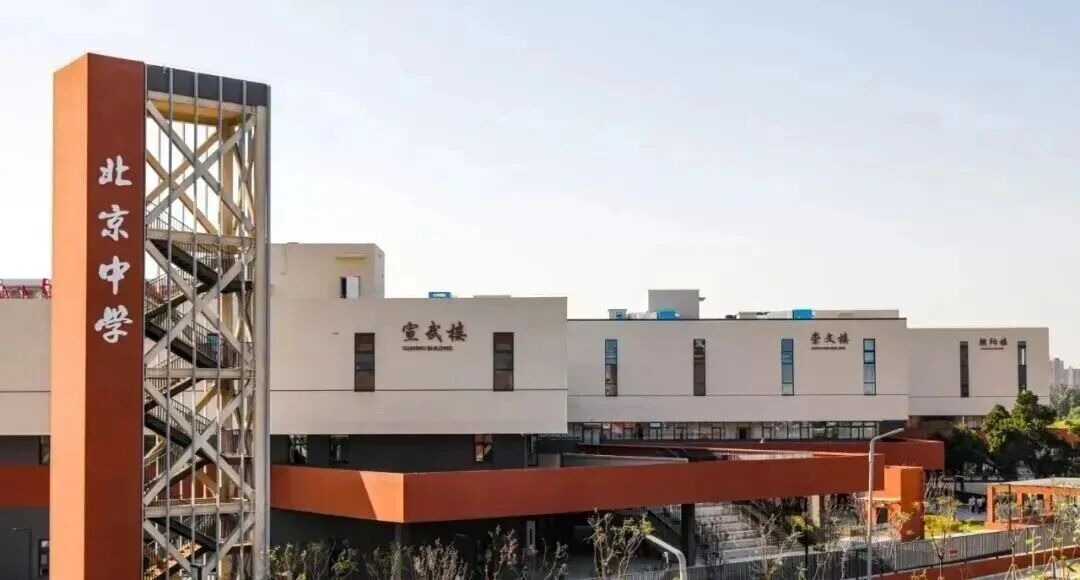
From the integration of scientific research resources to student innovation projects, and from technology-focused featured courses to laboratory platform construction, the school demonstrated its phased accomplishments in science and technology education in recent years through a wealth of practical examples, further deepening the forum’s value of exchange through “promoting dialogue with practice and fostering consensus through dialogue.”
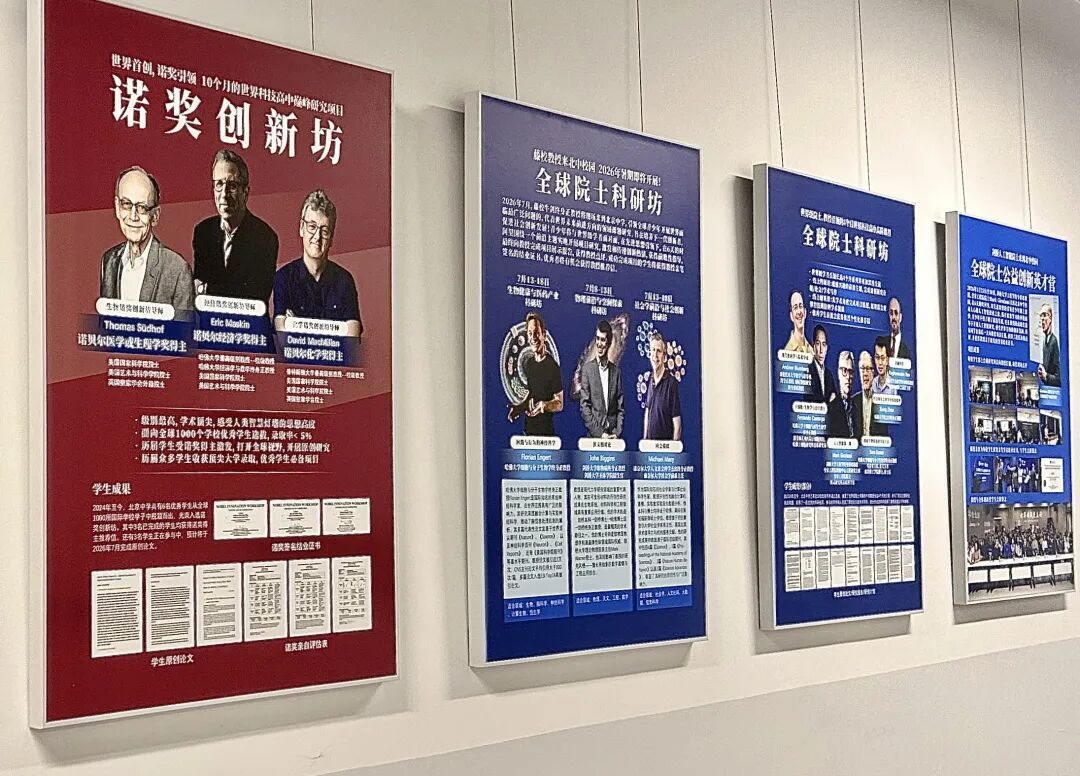
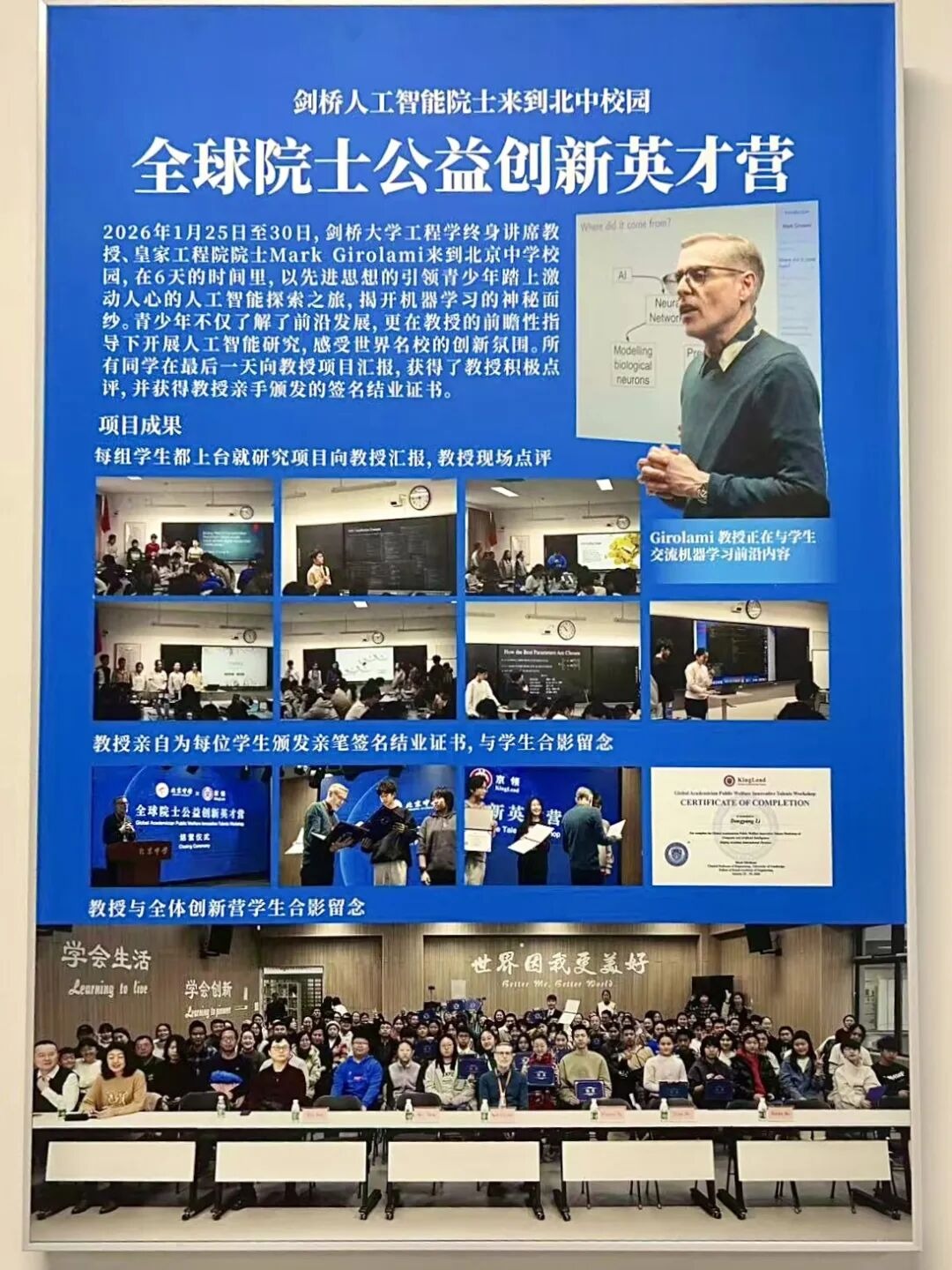
Exhibition of Selected Research Projects
from the International Division of Beijing Academy
07
Sub-Forums:
Focusing on the Substantive Development and Diverse Practical Exploration of Science and Technology High Schools
In the afternoon, three sub-forums were held simultaneously at the National Convention Center and Beijing Academy, closely addressing the core themes of world science and technology high school development. In-depth discussions and exchanges took place around the specific topics of “Standards, Connotations and Evaluation Mechanisms of Science and Technology High Schools,” “Faculty Development and the Creation of Technology-Featured Programs and Courses in Science and Technology High Schools,” and “Curriculum System Integration and Innovation in Science and Technology High Schools.”
Sub-Forum 1
“Standards, Connotations and Evaluation Mechanisms of Science and Technology High Schools”
This forum brought together principals and core frontline leaders from international schools in cities including Beijing, Guangzhou, Shenzhen, Ningbo, Tianjin, and Xiamen, focusing on faculty development and technology-featured programs and courses in science and technology high schools, sharing practices in resource integration and talent cultivation implementation.
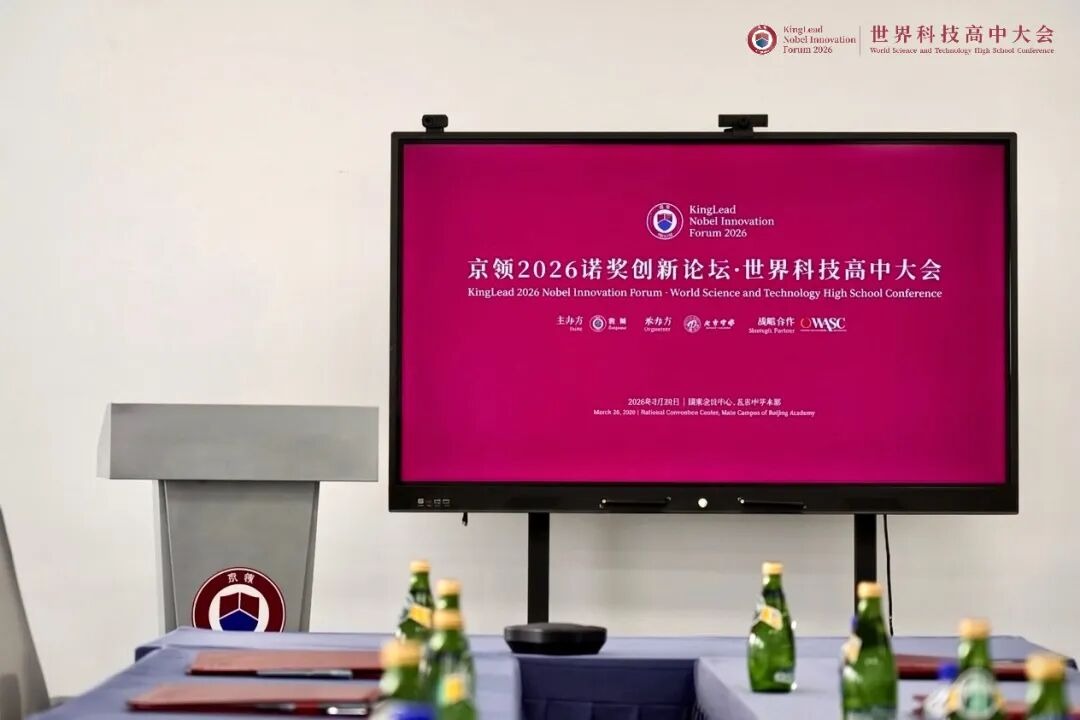
As early as 2025, KingLead officially established the Nobel Innovation Platform World Science and Technology High School Platform at the National Convention Center, committed to advancing global science and technology high school education from regional exploration to systematic collaboration, building an important alliance for resource sharing and innovation cooperation, and providing a new global paradigm for cultivating future-oriented scientific and technological innovative talents.
Building on this foundation, this sub-forum continued to focus on world science and technology high school standards at the National Convention Center. Experts from the KingLead Research engaged in in-depth exchanges and discussions with principals from across the country on the development of standards for science and technology high schools, charting the direction for the development of global science and technology high schools.
Sub-Forum 2
“Faculty Development and the Creation of Technology-Featured Programs and Courses in Science and Technology High Schools”
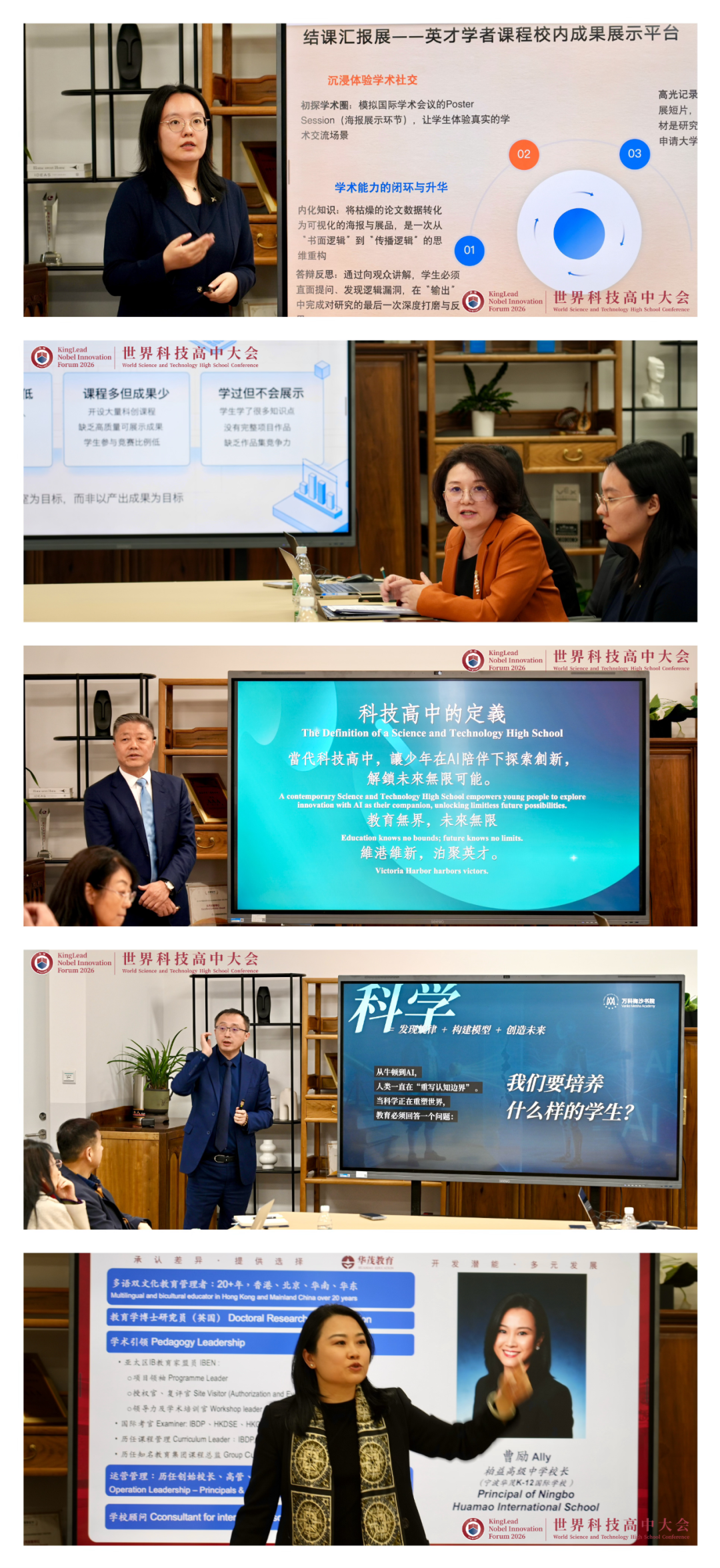
Sub-Forum 2 centered on “Faculty Development and the Creation of Technology-Featured Programs and Courses in Science and Technology High Schools,” with multiple education practitioners sharing their core perspectives.
In terms of curriculum design, participating guests proposed adopting a dual-mentor system to support students in selecting their own research topics, conducting systematic research training around real-life issues, and achieving academic closure through outcome presentations, emphasizing that scientific research literacy begins with curiosity and matures through systematic training. Regarding faculty development, guests noted that schools can promote teachers to become lifelong learners through cross-grade and interdisciplinary teaching research mechanisms, relying on professional learning communities, while adhering to the educational mission of respecting differences and stimulating potential. On evaluation standards, they suggested that schools should encourage free exploration, return to the essence of education, focus on students’ capacity for self-reflection and humanistic spirit, and avoid formalism through measures such as “negative lists.” Regarding science education, guests believed that importance should be placed on the legacy of the history of science and the scientific spirit, cautioning against the deification of science, with the core lying in building an institutional system that tolerates failure and encourages innovation. In terms of science and innovation system development, they emphasized shifting from “heavy investment” to “genuine output,” adopting a lightweight model with the end goal in mind, achieving a complementarity between in-school foundational training and out-of-school resources.
Sub-Forum 3
“Curriculum System Integration and Innovation in Science and Technology High Schools”
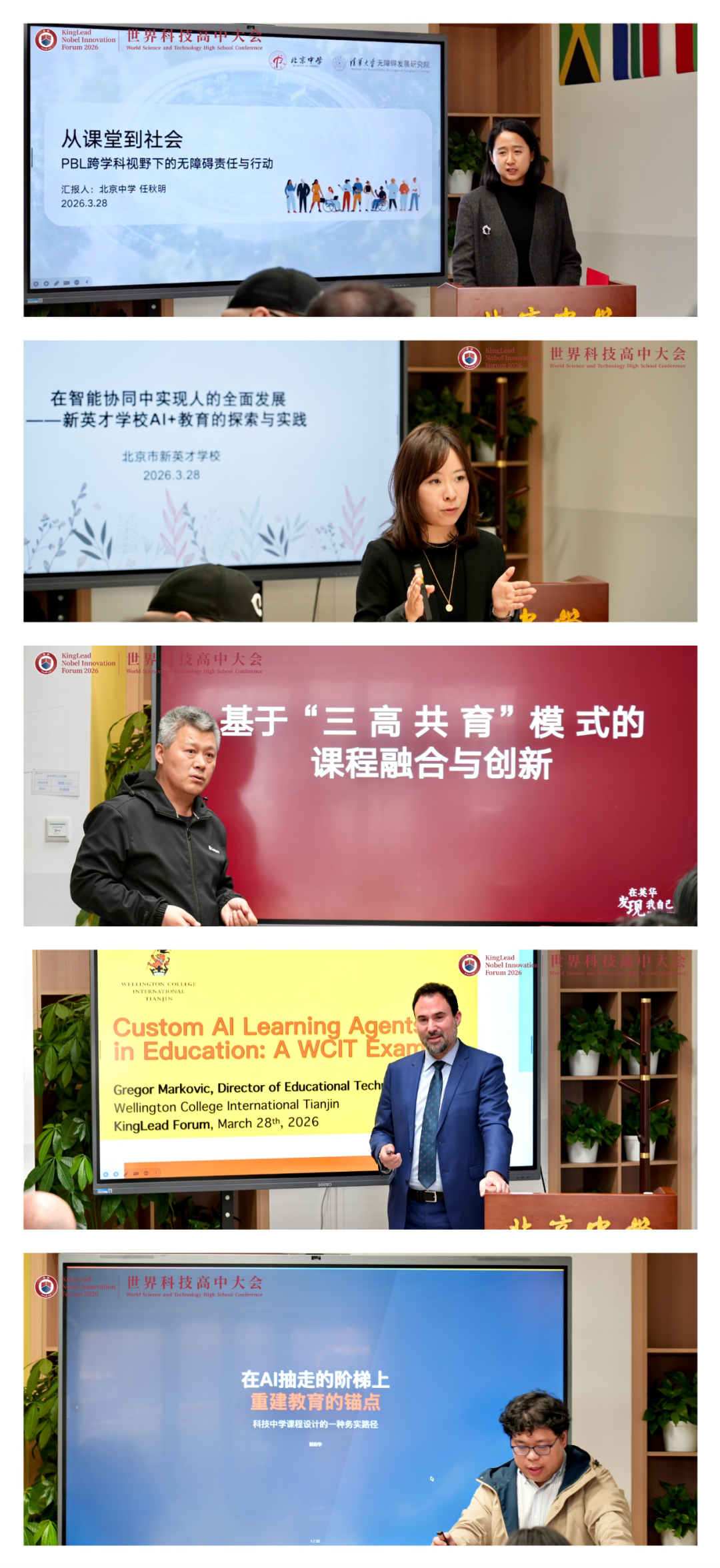
Sub-Forum 3 centered on “Curriculum System Integration and Innovation in Science and Technology High Schools,” with multiple educators sharing their practical approaches.
In terms of interdisciplinary project-based learning, participating guests proposed using a dual-mentor system to guide students in conducting research on real-world issues across fields such as design, technology, and engineering, transforming classroom knowledge into social action, and cultivating academic ability and a sense of social responsibility. Regarding curriculum design concepts, guests suggested that in the face of social changes in the AI era, schools should shift from cultivating “employees” to cultivating “self-organizers,” reducing skill presuppositions and encouraging students to explore independently and learn through trial and error, stimulating students’ agency and initiative in real projects. In terms of AI education exploration, guests believed that technology should serve the “comprehensive development of human beings,” establishing AI classroom models, teacher digital literacy certification, and customized AI learning assistants to guide students to think independently rather than directly obtaining answers. Finally, regarding resource integration models, they shared the “three-highs” collaborative model of “high schools, higher education institutions, and high-tech enterprises,” relying on high-end laboratories to enable students to hone their scientific research spirit in real projects, establishing a complete pathway from theory to outcome transformation.
Conclusion
"Establishing international standards
Creating practical benchmarks
Contributing Chinese solutions"
This event brought together Nobel Prize-winning wisdom and global perspectives, engaging in deep dialogue and intellectual exchange around the standards and practices of world science and technology high school development, providing a high-end platform for global educators to build consensus, establish standards, and share resources.
The KingLead 2026 World Science and Technology High School Development Research Report and the KingLead 2026 China Science and Technology High School Development Research Report systematically construct five core dimensions for the development of science and technology high schools, offering standard guidance and direction for the development of global science and technology high schools. The vivid practical cases shared by international schools from both China and abroad during the forum vividly presented diverse explorations in the implementation of science and technology high school development.
As emphasized by Nobel laureates, world-class academicians, and leaders of international accreditation organizations, a science and technology high school is not a simple addition of courses, but a systematic restructuring of educational models; it is not elite cultivation for a few, but a strategic infrastructure for the future. This aligns seamlessly with the forum’s original intention of “building consensus, establishing standards, and pooling resources.”
Taking this as a starting point, KingLead will continue to join hands with global educators to transform the development of science and technology high schools from concept into action, and from standards into practice. By integrating global perspectives with Chinese characteristics, KingLead will make unremitting efforts to cultivate innovative talents capable of creating the future, while continuously contributing Chinese wisdom and practical solutions to the development of global science and technology high schools.
本文为京领原创出品
未经授权,请勿转载
转载或商务合作请联系
电话:010-82362348
微信:Kinglead-edu